
In short
Custom cabinetry is only as useful as what goes inside it. Organizing it well means measuring every drawer and shelf, placing items by how often they are used, and choosing inserts, risers and dividers sized to the millwork, so nothing slides, stacks or disappears behind a door.
Start with use, not products
The temptation with new cabinetry is to buy matching containers and fill the shelves. The better order is the reverse: first decide what lives in each run of cabinetry and how often it is reached for, then choose what holds it.
One rule guides most of it:
- Daily: between waist and eye height, at the front, with nothing in the way.
- Weekly: just above or below that zone.
- Occasional: the top shelves, the deepest corners, the back of the run.
Measure everything
Interior dimensions are rarely the dimensions on the drawing. Before choosing any insert, measure:
- the clear interior width, depth and height of each drawer, allowing for the slides;
- the shelf spacing, and whether the shelves adjust;
- hinge and door clearance, which takes space at the front of a cabinet;
- anything fixed inside, such as plumbing, outlets or lighting.
An insert that is a few millimeters too wide is a drawer that will not close.
Drawers
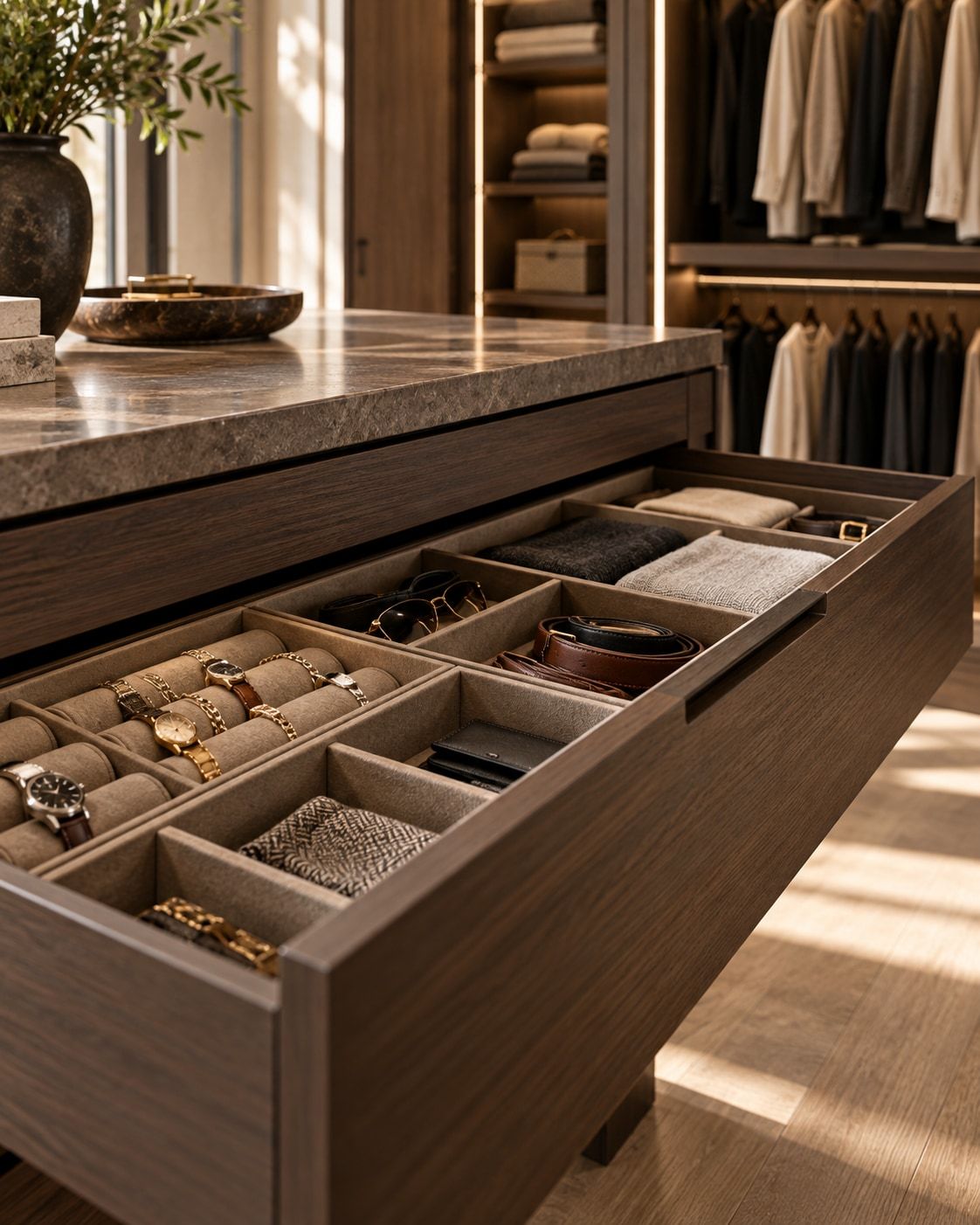
Drawers do the most work in a well-organized kitchen or dressing room. Shallow drawers suit flat things such as cutlery, utensils, jewelry and accessories, with dividers so each piece keeps its place. Deep drawers suit pots, lids and boards stored on edge, so any one of them can be lifted out without unstacking the rest.
Shelves
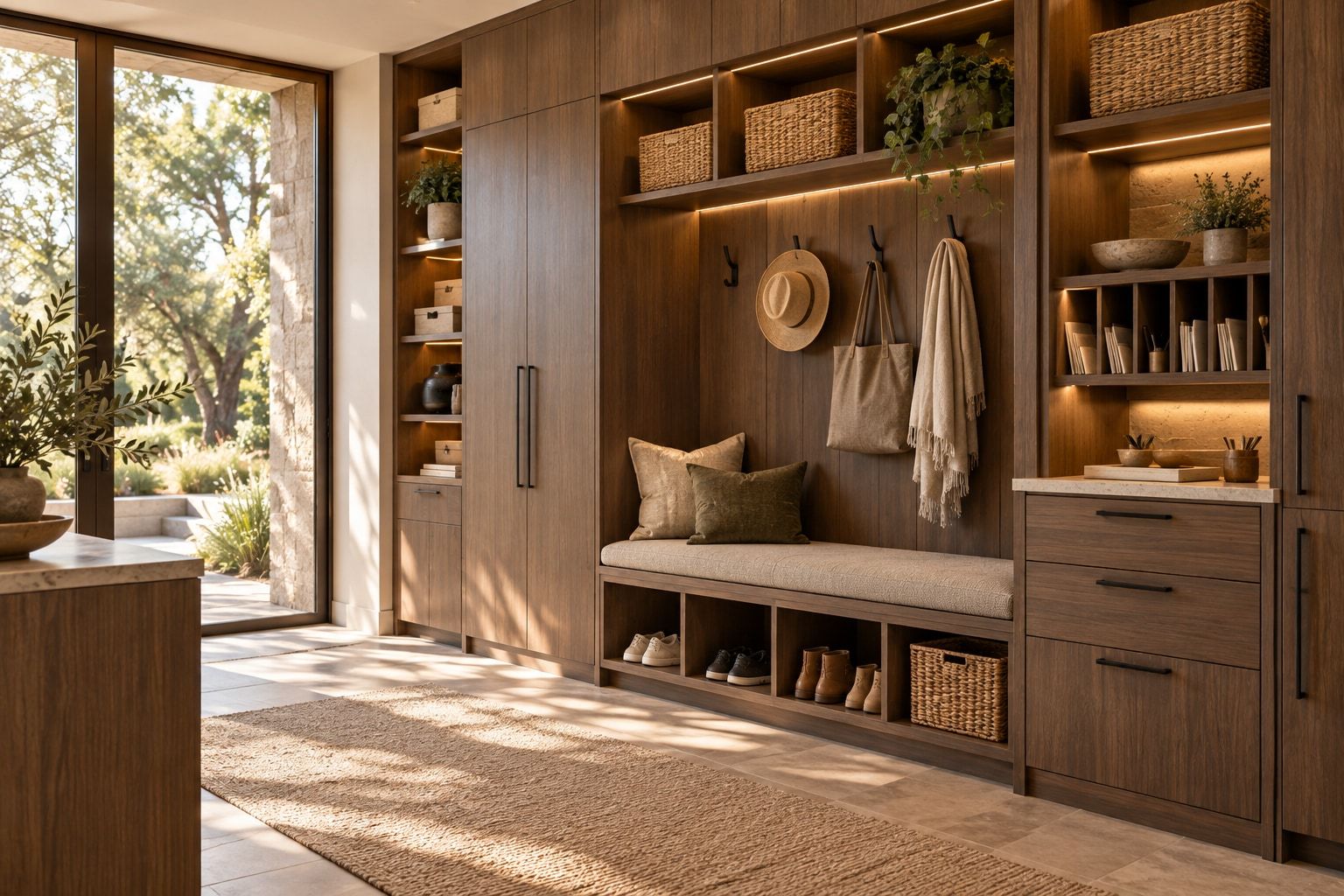
Set shelf heights to the contents, not to an even spacing. Risers double the usable space for plates and glasses. Turntables and pull-outs bring the back of a deep cabinet forward. Anything that has to be stacked more than a few items high usually belongs somewhere else.
Pantry cabinets and tall pull-outs
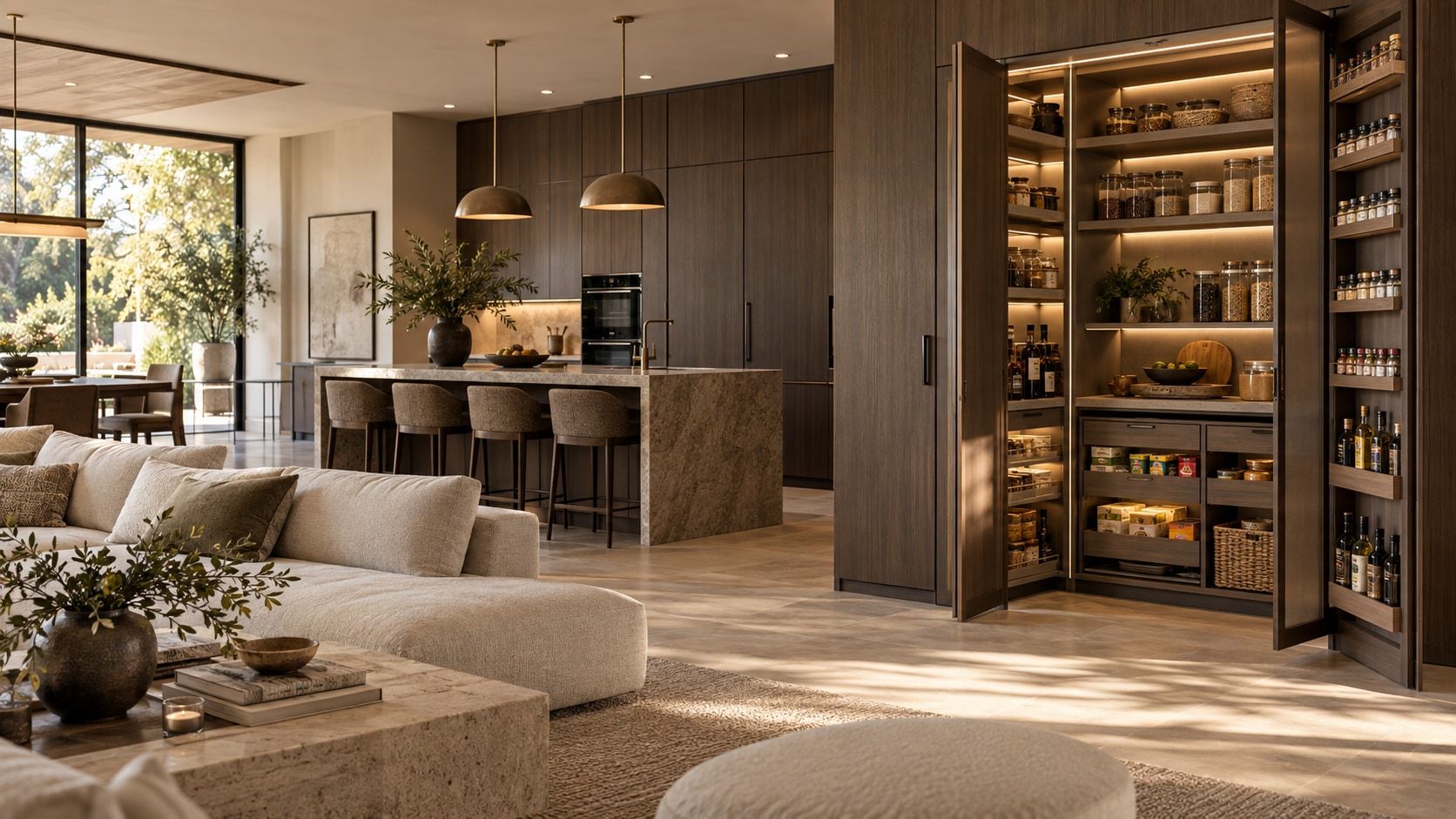
Decant staples into clear, labeled canisters where it helps you see what is running low, and keep items that are used and replaced quickly in their packaging, grouped in a basket. Keep the heaviest things low and the everyday ones at eye level.
Closet millwork
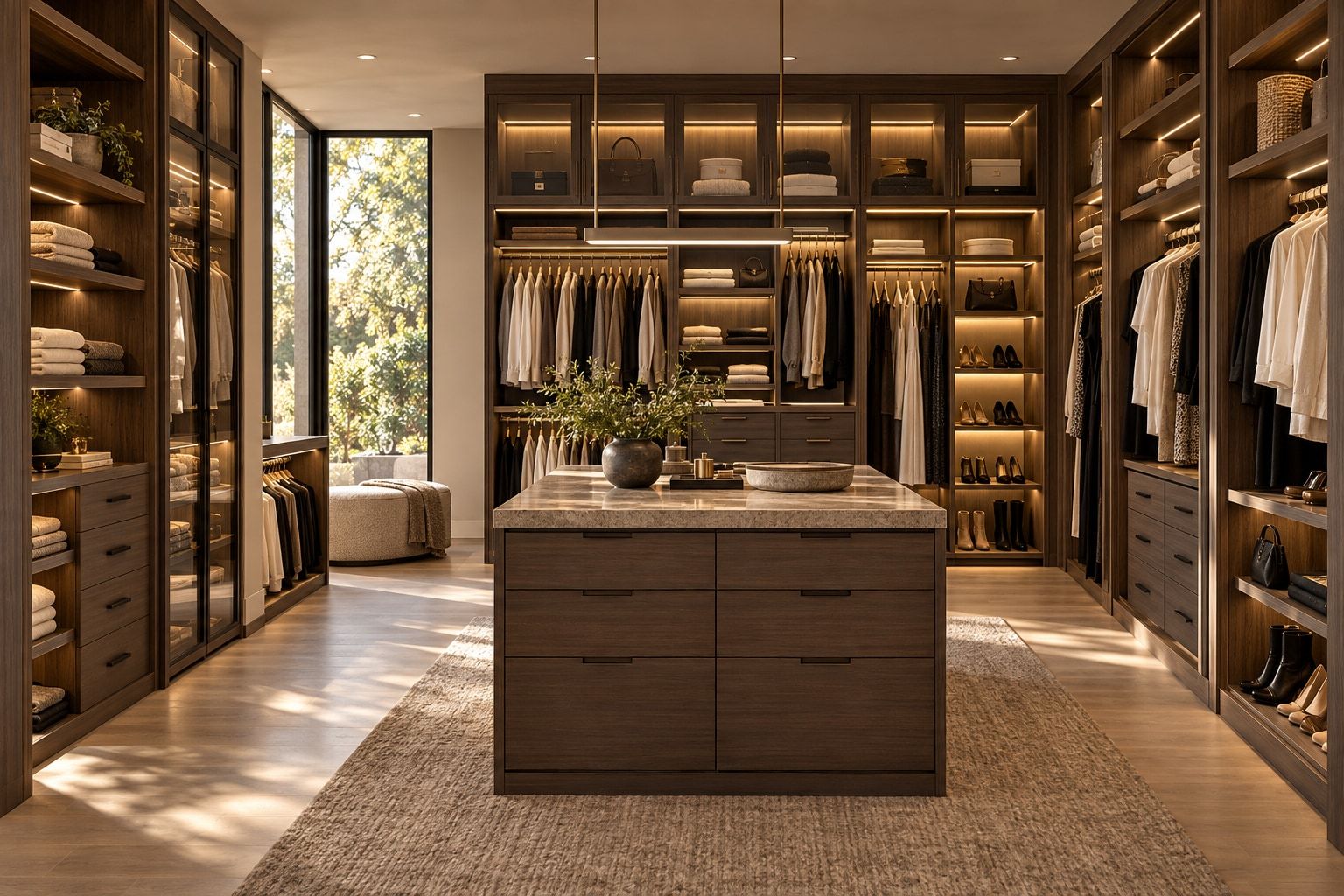
In a dressing room, the ratio of long hanging to double hanging should follow the wardrobe, not the drawing, so count dresses, coats and trousers before deciding. Shoes read best on shelves where each pair is visible. Accessories belong in shallow drawers with lined dividers, where watches, belts and jewelry stay separate and easy to see.
Labels that stay quiet
Labels should help without shouting: small, consistent, and placed on shelf edges or inside drawer fronts, never across the face of every container. In a beautiful room, the label should be the last thing you notice and the first thing you can read.
Keeping it that way
Cabinetry stays organized when everyone in the household knows where things go. A care guide records the system, and a Seasonal Reset restores it after the holidays or a change of season.
If your cabinetry is still on the drawing board, Home Harmonics can plan the interior before it is built, and show you an image of the finished space first. If it is already installed, closet and wardrobe and pantry and kitchen organization begin with a complimentary walkthrough.