
In short
A new custom home is easiest to move into when the inside of it is planned before the first box arrives. Walk the finished rooms, measure every shelf, drawer and closet, decide where each category will live, source the storage to those measurements, and pack the old home by destination, so move day becomes unpacking into a plan.
The weeks before the keys
A custom home is finished to your taste, but on the day you receive the keys it is empty in a way a resale home never is. There are no habits in it yet. Every drawer, shelf and closet is a decision waiting to be made, and if those decisions are left until move day, they are made in a hurry, by whoever happens to be holding a box.
The calmest move-ins happen when the inside of the house is planned before anything arrives. Most of that work can be done in the weeks between substantial completion and the closing.
Walk the house with the inside in mind
The builder’s walkthrough is about finishes and defects. Take a second, separate walk that is only about storage:
- Open every door and drawer. Note which cabinets are deep, which are tall, which sit beside the range or the sink, and which are awkward to reach.
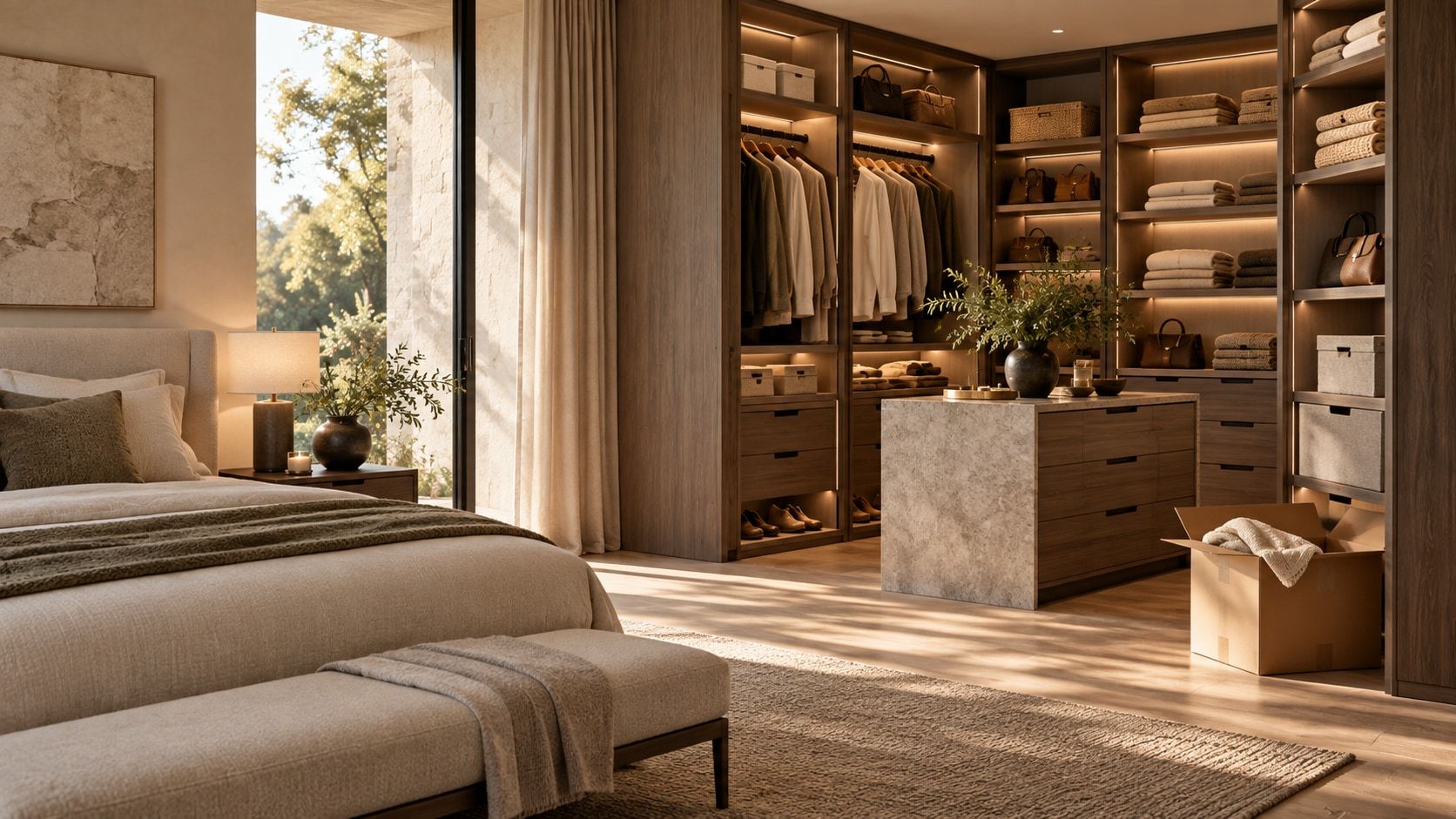
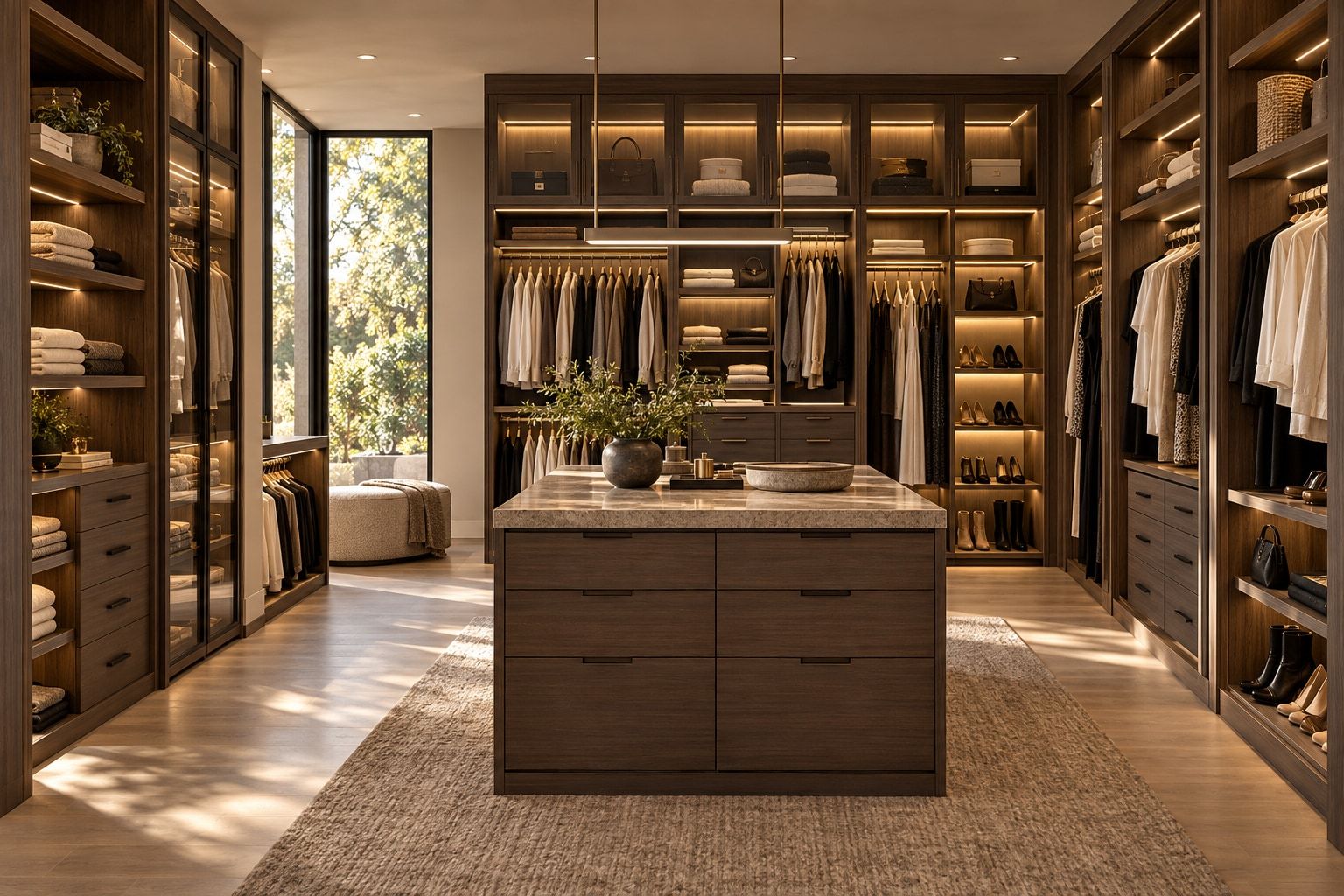
- Look at the closets as a wardrobe, not a room. How much long hanging, double hanging, shelving and drawer space is there in each one?
- Find the overflow. Garage, attic, under-stair and mechanical-room space will hold the things that do not belong in daily rooms.
Measure before you buy anything
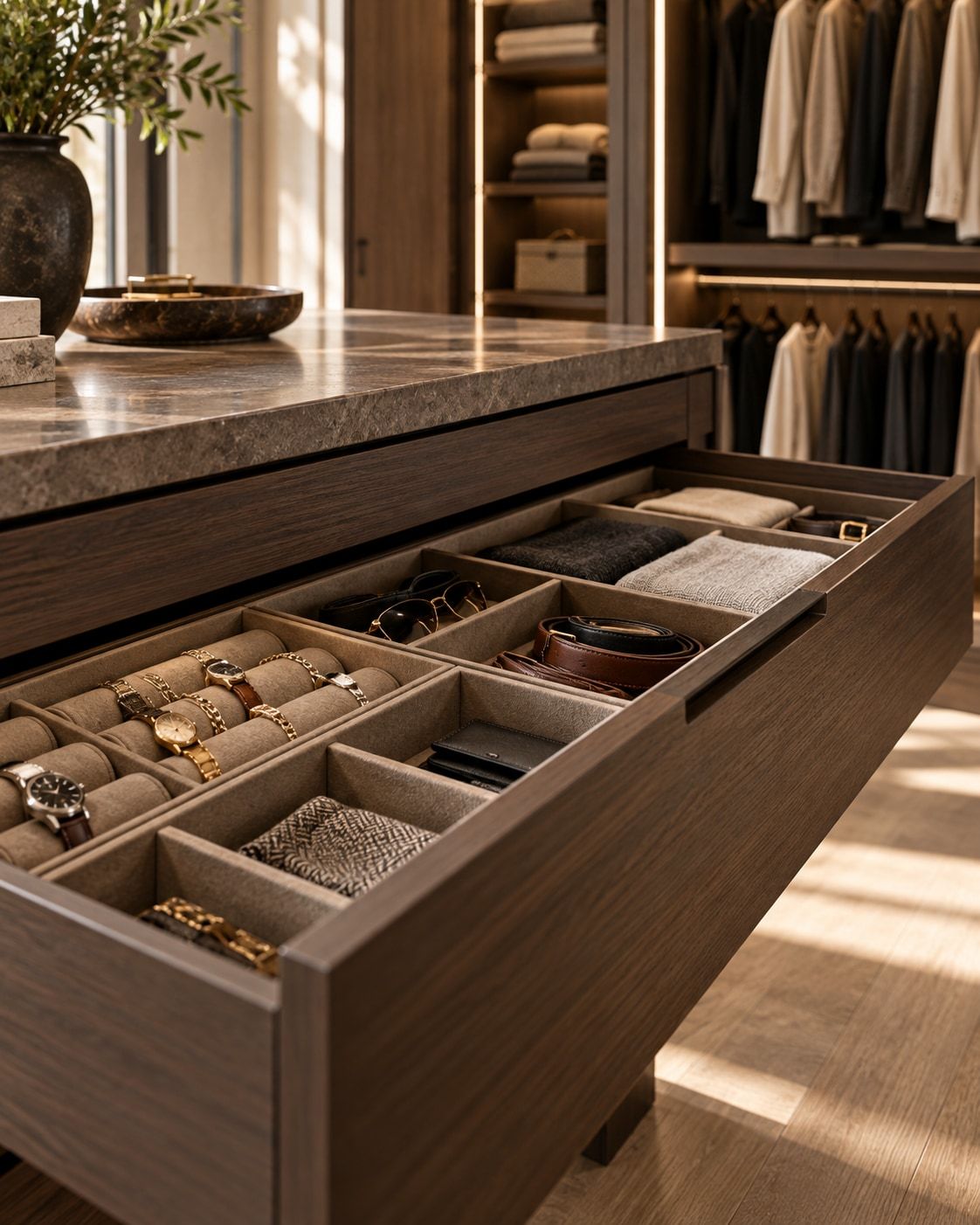
Organizing products bought before the house is measured are the most common waste in a new home. Measure the interior width, depth and height of every shelf and drawer you plan to fit, and the clear height under the lowest shelf in the pantry and the linen closet. Note hinge positions and any face-frame lip, because they decide what will slide in.
With those numbers, inserts, risers, baskets and hangers can be chosen to fit the millwork the first time.
Give every category an address
Before packing, decide where each category of belongings will live in the new home: everyday dishes, serving pieces, pantry staples, cleaning supplies, linens, out-of-season clothing, documents, sports equipment. Place the things used daily between waist and eye height, and the things used occasionally higher, lower or further away.
Write the plan down room by room. It becomes the unpacking map.
Pack by destination
A box labeled “kitchen, misc.” is unpacked twice. Label boxes by the room and the destination inside it (“Kitchen: drawer beside the range”, “Primary closet: shoes”), and number the boxes that matter on the first night. Whoever is packing the old home, whether that is you, family or the moving company, works from the same plan.
Plan the first night
Decide which rooms must work by the end of move day. For most households that is the kitchen, the bedrooms and the bathrooms: coffee, a meal, made beds, towels and toiletries. Everything else can follow in order, as long as nothing is unpacked “for now” into a space it does not belong in.
When to bring in help
If the home is large, the move date is fixed, or you are relocating from another city, a move-in concierge takes this planning off your hands. Home Harmonics plans each room before the move, by video when you are relocating, sources the storage to the measurements, unpacks and sets up the house over consecutive days, and leaves a care guide so the system holds once you are living in it. See how Move-In Concierge works.
If you are still in the drawings, it is not too early. Shelf heights, drawer layouts and the balance of long and double hanging are far easier to change on paper than after installation. Read about organizing inside custom cabinetry.